Carpe the Diem: Why We Left Everything to Sail the Globe
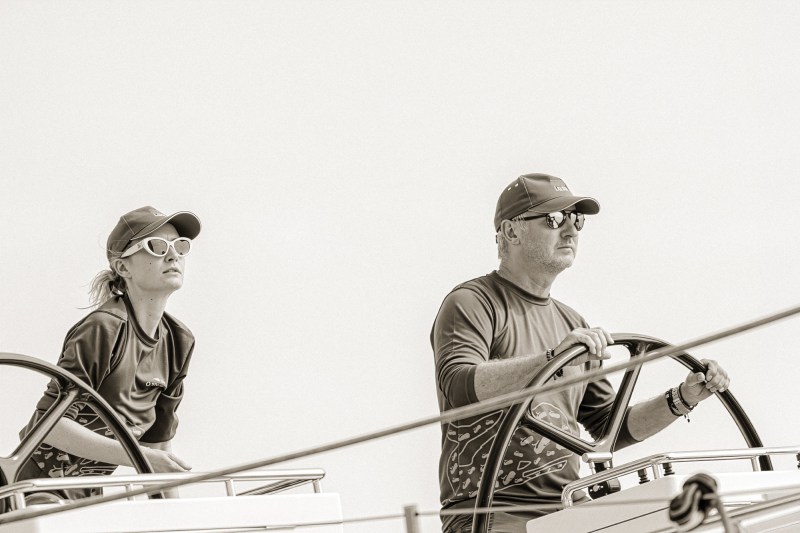 Richard Hadida takes the helm of the Oyster 885 Lush as the family begins their 16-month journey to reclaim time and explore the globe.
Ugo Fonolla/Courtesy Richard & Ali Hadida
Richard Hadida takes the helm of the Oyster 885 Lush as the family begins their 16-month journey to reclaim time and explore the globe.
Ugo Fonolla/Courtesy Richard & Ali Hadida
The day Ali Hadida tossed her 2-year-old son, Harry, into a swimming pool in Antigua was the day the gravity of the next 16 months finally arrived.
Ali isn’t a reckless parent. Until recently, she was a doctor in the British National Health Service, a profession that trains you to spot red flags before they turn into catastrophes. She had done her homework. She had purchased the highest-rated life jackets available, sized them to Harry’s small frame, and assumed the gear would do the work.
But when Harry hit the water, he flipped. The jacket didn’t cradle him; it betrayed him, holding his head dangerously low in the water.
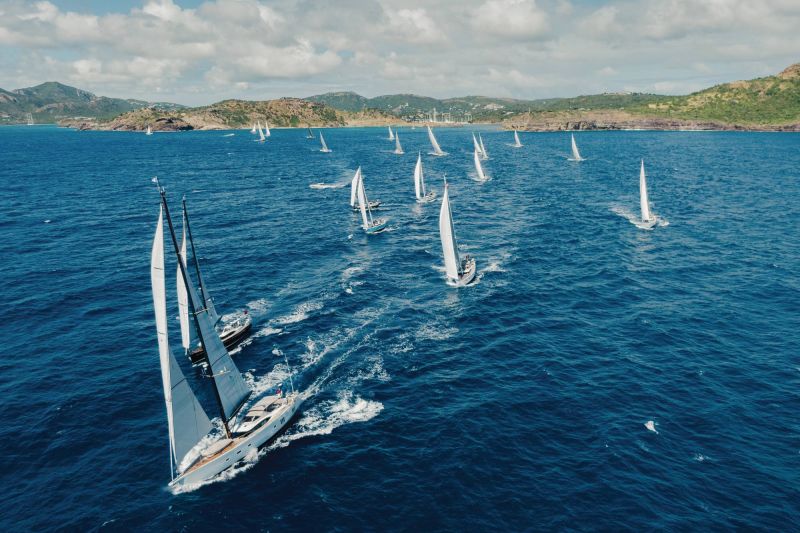 A majestic procession of Oyster yachts sets sail from Antigua, marking the beginning of an epic voyage across the world’s oceans.
Courtesy Oyster World Rally
A majestic procession of Oyster yachts sets sail from Antigua, marking the beginning of an epic voyage across the world’s oceans.
Courtesy Oyster World Rally
“That was a shocking day,” Ali says. “I realized that for an entire month of sailing with him as a baby, I’d been relaxed, not knowing that the crotch straps had to be tight enough to be almost uncomfortable for the jacket to actually work. It was a big lesson. On a boat, you can’t just assume the gear is the answer. You have to be professional about the reality.”
That moment of clarity on a quiet Caribbean afternoon set the tone for what is perhaps the most ambitious family voyage currently on the water. In January 2026, Ali and her husband, Richard Hadida, tech entrepreneur, owner and chairman of Oyster Yachts, set off from the dock with Harry and pointed Lush, their Oyster 885, toward a circumnavigation with the Oyster World Rally.
For Richard, sailing is the air he breathes and the business he resurrected when he acquired Oyster in 2018. For Ali, sailing is a brand-new language, one she’s had to learn while managing the anxieties of first-time motherhood and the physical toll of severe, chronic seasickness.
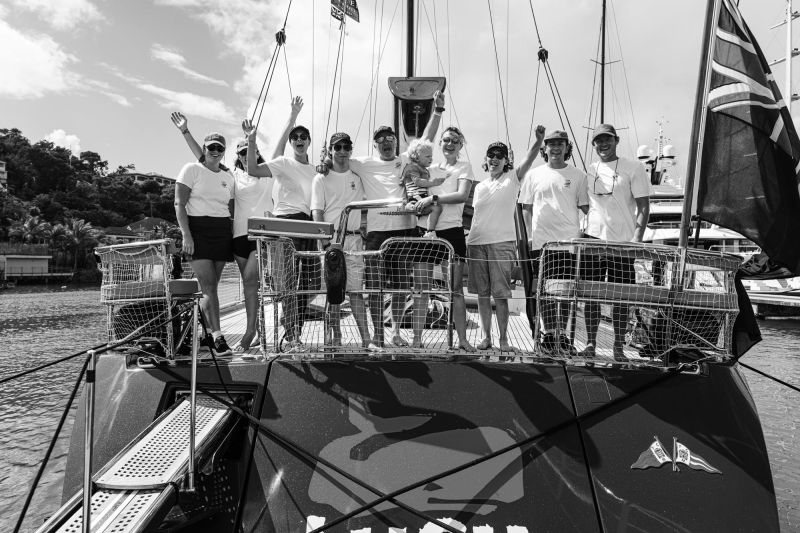 From the tight-knit crew on the aft deck of Lush to the dedicated Oyster support team on the ground, the rally is defined by the community that keeps the fleet moving.
Ugo Fonolla/Courtesy Oyster World Rally
From the tight-knit crew on the aft deck of Lush to the dedicated Oyster support team on the ground, the rally is defined by the community that keeps the fleet moving.
Ugo Fonolla/Courtesy Oyster World Rally
The decision to go now, rather than in 2028 or 2030, was made in the shadow of a carpe diem tattoo on Richard’s wrist. It’s easy to look at a 90-foot yacht and see a luxury asset, but for the Hadidas, Lush has been rebranded as a working vehicle. The mission isn’t just to see the world; it’s to reclaim a window of time before the rigidity of school schedules and the momentum of adult life shut it forever.
“We kept talking about doing it in a few years,” Richard says, leaning back against the cockpit cushions as the Antigua sun catches the rally flags in the harbor. “But then you get to next year and there’s always a reason to wait. We’re both healthy, the opportunity is here, and Harry is at that perfect preschool age. He’ll come back at 3½ having traveled the world. We just suddenly thought, My God, let’s actually go.”
That urgency was sharpened by news, just as they were preparing to depart, that a close friend had received a terminal diagnosis. It served as a stark reminder that the perfect time is a myth.
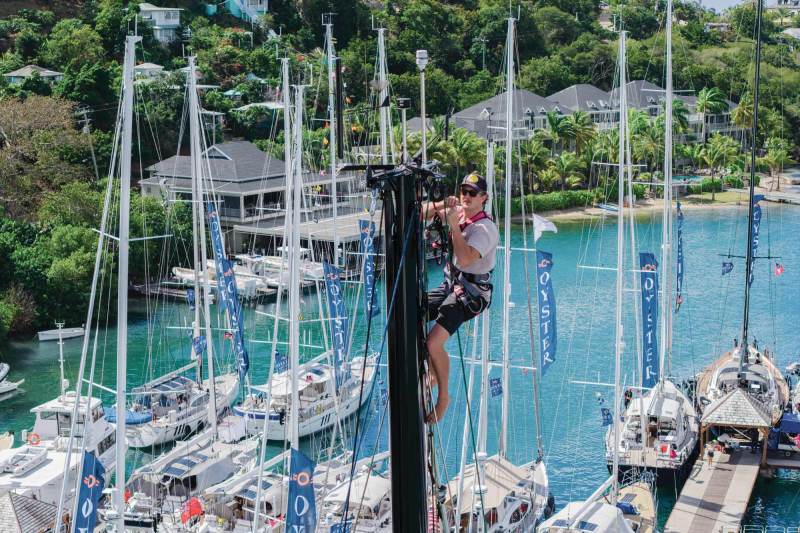 To be among the few thousandths of a percent of the population to see every degree of longitude pass under the keel requires more than just a capable boat.
Ugo Fonolla/Courtesy Oyster World Rally
To be among the few thousandths of a percent of the population to see every degree of longitude pass under the keel requires more than just a capable boat.
Ugo Fonolla/Courtesy Oyster World Rally
The statistics of circumnavigation are exclusive for a reason. More people climb Everest in a single year than sail around the globe. To be among the few thousandths of a percent of the population to see every degree of longitude pass under the keel requires more than just a capable boat. It requires a radical, sometimes painful, shift in perspective.
For Ali, that shift meant turning Lush into a floating pediatric ward. Her medical training, which once focused on surgical specialties and hospital efficiency, was redirected toward a granular analysis of risk.
“A boat is not a floating building. It’s a working vehicle,” she notes. “I also didn’t consider that Harry might be trying to change the engine settings or tweak every button he can find. And he wants to participate in everything we do.”
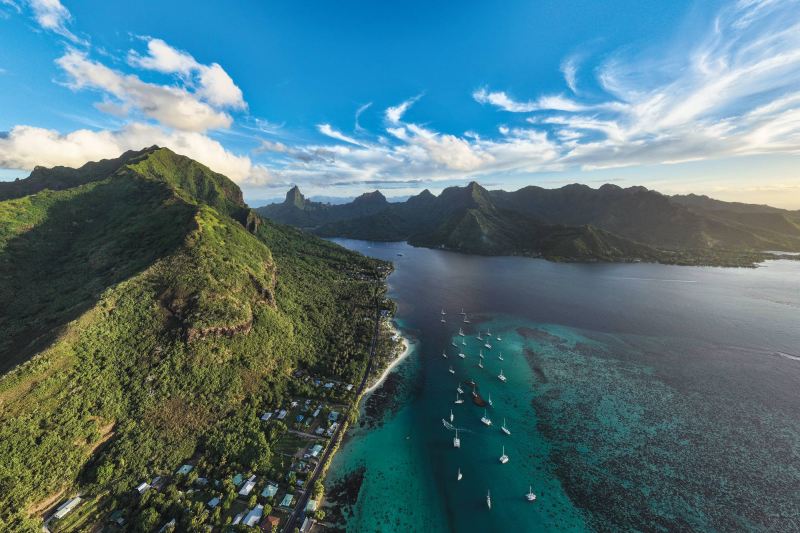 The Hadidas, along with the rest of the Oyster fleet, aim to transform cruising into a mission of regenerative tourism.
Courtesy Oyster World Rally
The Hadidas, along with the rest of the Oyster fleet, aim to transform cruising into a mission of regenerative tourism.
Courtesy Oyster World Rally
The preparation on Lush took on a clinical tone. The boat was fitted with bespoke netting on the side rails, a visual compromise Ali was happy to make for peace of mind. They installed locks on cabin doors to prevent Harry from wandering onto a dark deck while sleepwalking, a habit he’d recently picked up. But the most innovative solutions were those that addressed the “what if” scenarios. Ali sourced carbon-dioxide-inflatable T-shirts with hidden AIS locators. If Harry were to fall into the water in a busy port or while the boat was underway, he wouldn’t just be floating; he would be broadcasting his exact GPS coordinates to the boat’s navigation system.
“We even connected with a friend of ours who’s a stunt director for Tom Cruise,” Richard says. “We were looking at building a cable car system so Harry could get to all parts of the boat safely. We ended up moving away from it because it was too complex, but it shows the level we were thinking at. We’ve killed the power to winches and helms. If we aren’t using them, they are dead. You have to be that professional about it.”
Perhaps the most relatable struggle, however, is Ali’s battle with the sea itself. It’s a rare thing for the wife of a yachting mogul to admit she once hated being on the boat. Ali gets sick in cars, planes and elevators, and the motion of a 90-foot yacht was, for a long time, a barrier not just to her enjoyment, but also to her relationship with Richard.
“I couldn’t enjoy it,” she says. “I’d get down just at the idea of going on the boat.”
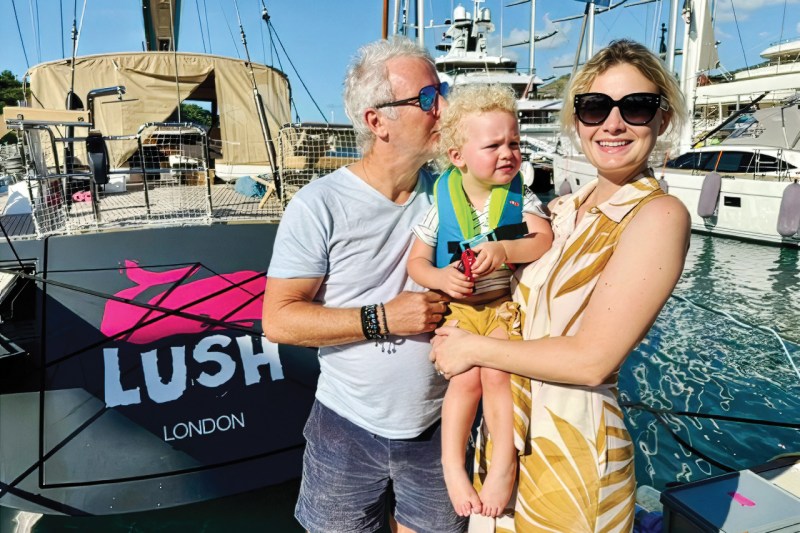 From the vibrant pre-departure energy in Antigua to the serenity of a remote anchorage, the Hadidas will trade the harbor hustle for a purposeful 10-knot life.
Courtesy Richard & Ali Hadida
From the vibrant pre-departure energy in Antigua to the serenity of a remote anchorage, the Hadidas will trade the harbor hustle for a purposeful 10-knot life.
Courtesy Richard & Ali Hadida
She approached the problem like a clinical trial. She researched the pharmacology of motion sickness, layering medications in a specific cocktail that allows her to function. The couple also installed a French LED system—technology used on naval destroyers—that projects a virtual horizon on the interior cabin walls. When the boat pitches, the lights move to give the brain the visual cue it needs to sync with the inner ear.
But the real breakthrough was psychological.
“I found that if I actually work the boat, if I helm, I’m OK,” Ali says. “I need that sense of control. I realized that an important part of seasickness is just giving yourself the time to adjust. We did a month on the boat before we left, and that was the key. You have to fight your way through the first few days.”
As they head toward the Panama Canal and the Pacific beyond, the voyage has taken on a purpose larger than family bonding. In particular, they are looking forward to the Galapagos, not just for the wildlife, but for a chance to implement a philosophy of “Regenerative Tourism.” Working with Sarah Darwin, the great-great-granddaughter of Charles, the Hadidas are integrating the Oyster fleet with local research institutes. The goal is to leave each landfall better than they found it, whether through research support or environmental advocacy.
“I want the world to benefit from us going around it,” Richard says. “It shouldn’t just be about us.”
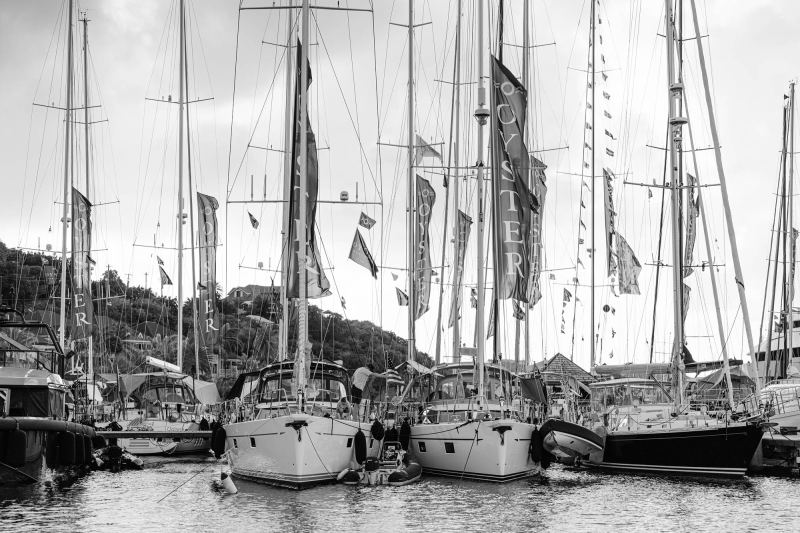 The Oyster World Rally is less of a race and more of a village in motion.
Ugo Fonolla
The Oyster World Rally is less of a race and more of a village in motion.
Ugo Fonolla
Despite the scale of the boat and the business, Richard is adamant that this is not a passive experience. He isn’t a passenger on his own yacht. “I’m doing the whole thing,” he says. “We aren’t sitting at the back drinking champagne. We’re doing our watches. Thanks to Starlink, I can keep in touch with the business, but the point is to be a part of this village that moves together.”
That village includes their seven-person crew and family members joining for various legs. Richard’s 19-year-old son is joining for the first three months, a rare opportunity for a father to spend 24 hours a day with an adult son.
“To have that proper quality time,” Richard says, “that’s the real achievement. We’re all living together like roommates.”
By the time Lush returns to Antigua in 16 months, young Harry likely won’t remember the specifics of the Marquesas or the flavor of the air in the Indian Ocean, but the Hadidas are betting that the intentionality of this 10-knot life will leave a permanent mark on the family they’ve become.
“I get emotional thinking about the luck Harry has,” Ali says. “Most children don’t have both parents around them all day. This is a reset for all of us. It’s about showing him that the world is reachable.”
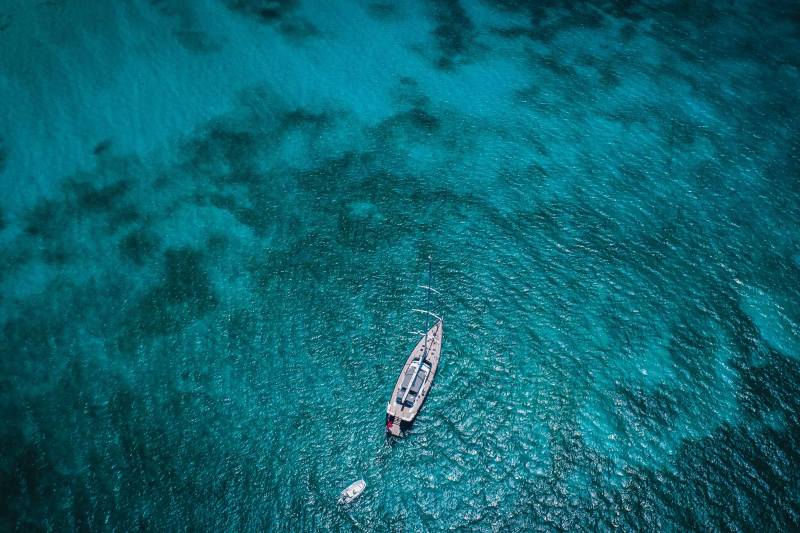 The mission isn’t just to see the world; it’s to reclaim a window of time before the rigidity of school schedules and the momentum of adult life shut it forever.
Courtesy Oyster World Rally
The Darwin Initiative: Sailing with Purpose
The mission isn’t just to see the world; it’s to reclaim a window of time before the rigidity of school schedules and the momentum of adult life shut it forever.
Courtesy Oyster World Rally
The Darwin Initiative: Sailing with Purpose
In the modern era of cruising, sustainability is often a catchall term for solar panels and watermakers. But for the Hadidas and the Oyster World Rally, the goal has shifted toward regenerative tourism, in which the travelers leave a destination in better condition than they found it.
The centerpiece of this effort is a collaboration with the Galapagos Conservation Trust and Sarah Darwin, the great-great-granddaughter of Charles Darwin.
Sarah, a botanist and environmentalist, is leading an initiative to reintroduce endemic species and restore the ecological balance of the islands that famously inspired her ancestor’s work.
As part of the rally fleet’s role, every participating boat undergoes a rigorous hull cleaning and clean-bottom certification before entering the Galapagos marine reserve. This step prevents the introduction of invasive species, a primary threat to the archipelago’s delicate ecosystem.
The Oyster fleet also acts as a mobile research platform. Participants assist in documenting local wildlife for research databases and monitoring water quality, providing a scale of data collection that local institutes couldn’t achieve alone.
Rather than simply consuming local resources, the rally participants coordinate with local projects to ensure their presence is a net positive, supporting nurseries for endemic plants and contributing to the local economies in a way that prioritizes environmental health.
“The Galapagos is a place I’ve dreamed about since I was a child,” Ali says. “But seeing it through the lens of this initiative makes it more than a destination. It gives the voyage a sense of achievement that goes beyond the miles sailed.”
The RallyThe Oyster World Rally is less of a race and more of a village in motion. While the 2026 edition includes 23 world-class yachts ranging from 50 to 90 feet, the hardware is secondary to the human element. For the Hadidas, the decision to join wasn’t just about the navigation; it was about Oyster’s family culture that transforms a solo voyage into a collective epic.
Long before the fleet leaves the dock in Antigua, the camaraderie begins digitally. The Salty Sea Wives texting group serves as a support network where the glamour of yachting meets the reality of offshore prep. Whether it’s sourcing pediatric medical kits or discussing the best pharmacology for seasickness, the flow of knowledge is constant.
“Everyone’s helping everybody,” Richard notes. “Oyster people are a really interesting crowd. They’ve all bought these boats because they want to go around the world, and that common goal creates an incredibly heavy bond.”
In Antigua, the vibe was tangible. Lines of Oyster yachts were moored together, flags waving, the air filled with the sounds of social gatherings and shared logistics. Richard and Ali describe it as a community of “fellow experiencers” where the hierarchy of business fades away.
“Rich and I throw parties fairly regularly, but they are usually split between our separate circles of friends,” Ali says. “The rally is different. We are making friends together, from the beginning. It’s nice to have a set of friends that are ours.”
By intention, the rally is structured around events that serve as emotional pressure-release valves for the crews. In the Panama Raft-Up, the fleet rafts together to transit the canal, one of the seven modern wonders. (Perhaps the eighth is the view of 23 boats moving as one between oceans.) On the Pacific Passage, after the 18-day leg to the Marquesas, the reunion in the islands is famously emotional.
“We saw them last year when the fleet came in,” Richard recalls. “They were all crying together, dancing together. There was so much love in the room.”
In December 2026, the fleet is expected to arrive in South Africa for Christmas in the bush. Many crews, including the Hadidas, will decamp ashore, inviting families out for a “proper safari Christmas” before the final Atlantic crossing.
For Ali, who transitioned from a high-pressure medical career into this voyage, the community provides the confidence that no amount of solo training could. The Salty Sea Wives and the previous participants offer a roadmap, proving that taking a toddler across an ocean isn’t crazy. It’s an intentional choice supported by a village of experts.
“You look at previous rallies, and they’ve established friendships that are incredibly important to them for the rest of their lives,” Richard says. “When we come back into Nelson’s Dockyard in April 2027, we won’t just be a family that sailed around the world. We’ll be part of a community that did it together.”
The post Carpe the Diem: Why We Left Everything to Sail the Globe appeared first on Cruising World.