How to Travel Abroad With Fishing Gear
 Traveling abroad to fish can be fraught with uncertainty, but proper paperwork can ease anxiety.
George Poveromo
Traveling abroad to fish can be fraught with uncertainty, but proper paperwork can ease anxiety.
George Poveromo
Traveling to remote angling destinations requires a good deal of money, time and planning. Yet the opportunity to experience world-class fishing makes it all worthwhile— most times.
Having traveled abroad for decades for Salt Water Sportsman and my World of Saltwater Fishing television series, we continue to haul a lot of gear. I take my own tackle, knowing rods and reels are in prime condition with fresh line and terminal systems I’ve personally fabricated. It’s a royal pain indeed gallivanting about with trolling outfits, spinning and small-conventional tackle, terminal gear and even lures, but I can fish with total confidence.
Rarely have we experienced issues getting rod caddies and coolers packed with reels and gear through foreign customs, especially on trips arranged by quality travel outfitters. However, foreign customs have recently questioned whether such quantities of gear might be sold and circumvent that country’s duties. And, what if you can’t explain your way through it?
CarnetsTo avoid such issues when flying to foreign angling destinations, we acquire a carnet (pronounced kar-nay, with the accent on the second syllable). This is an international customs document used to temporarily import goods into foreign countries duty- and tax-free for up to one year.
As of this writing, our most recent carnet was for a trip to the Azores. I brought five Penn International 70s and matching rods, four spinning reels and rods, and video production gear. The respective serial numbers and values of all items were listed individually on one main sheet.
A carnet comes with
color-coded pages and is divided into two main parts: vouchers (removed by customs at each destination) and counterfoils (stamped receipts which remain in the document).
Green covers (front and back) identify the holder, authorized representatives, and list all items. Yellow pages acknowledge your goods before you leave and upon your return. White pages are for foreign customs and list the temporary importation of your items into that country and their re-exportation when you leave. Blue pages are only if you’re transiting through a country without officially importing your items.
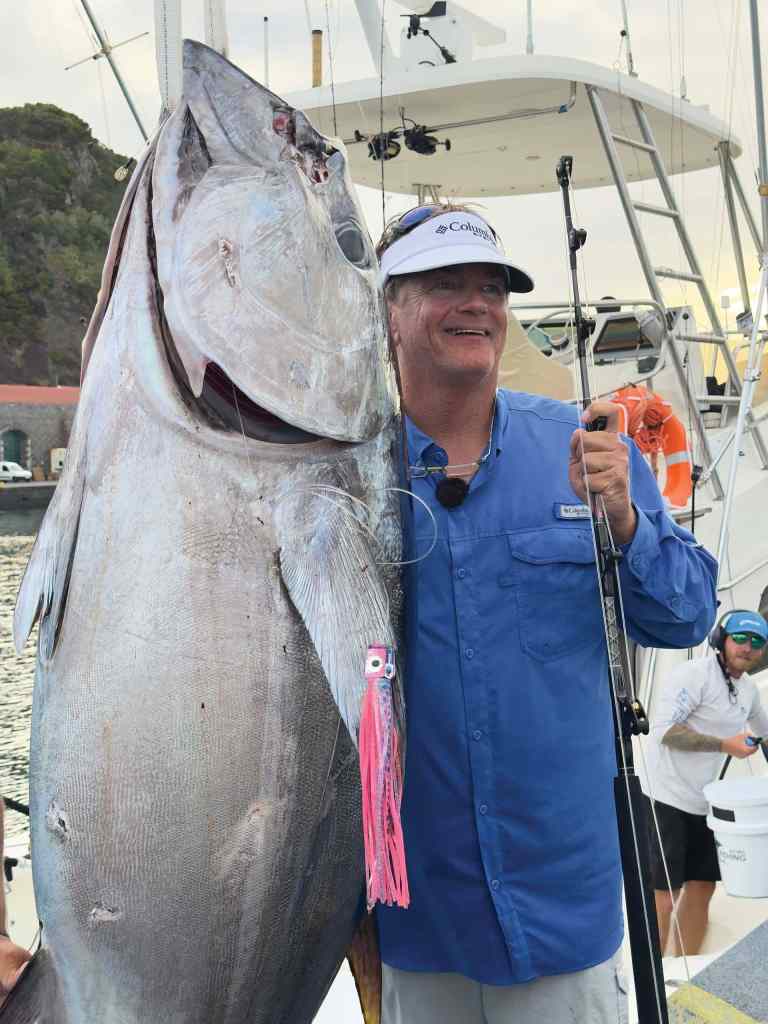 A carnet requires fees, but the money is well spent in relationship to the memories you will create in being able to catch the fish of a lifetime with your own tackle.
George Poveromo
Fee Structures
A carnet requires fees, but the money is well spent in relationship to the memories you will create in being able to catch the fish of a lifetime with your own tackle.
George Poveromo
Fee Structures
To be problem free at customs comes with a price. A carnet’s cost consists of two main fees: a basic processing fee and a bond premium fee. The basic fee structure is established by the issuing organization and is typically based on the total value of goods covered under the carnet.
For example, items valued up to $9,999 will cost approximately $255; items valued from $10,000 to $49,999 will cost around $300; items valued from $50,000 to $149,999 will cost around $365; items valued from $150,000 to $399,999 will cost around $425, etc.
A surety bond based on 40 percent of the value of your items will also be assessed at $10 per $1,000 value. The carnet bond serves as a guarantee for the payment of potential import duties and taxes at the time of temporary importation into a foreign country. The bond is cancelled once the carnet is returned and properly closed with no outstanding liabilities related to import duties, taxes or penalties.
There’s also a standard shipping fee and, of course, a premium fee to expedite a carnet’s delivery. Standard delivery time is around 24 to 48 hours. Our Azores carnet, for example, cost around $700; we use Boomerang Carnets (atacarnet.com).
Walk ThroughsIt’s essential to visit U.S. Customs at your departure airport with your gear and carnet. The U.S. Customs representative will sign off on and stamp both the green and yellow sheets.
At foreign customs, present the carnet with your gear. This acknowledges that the gear will not be left behind. The foreign customs representative will sign and stamp both the white importation counterfoil and white importation voucher. They will retain a copy of the voucher.
Upon your return to the states, U.S. Customs will sign and stamp the yellow re-importation counterfoil.
That’s all there is to it. A carnet costs a little more time and money, but you’ll be immune to any serious gear issues because of it. Prior to our Azores trip, we traveled to El Salvador for a TV shoot. We took two rod caddies packed with four trolling rods and eight spin/light conventional rods. We also had two medium-size boxes packed with reels (Penn 50 Internationals, Penn Spinners and Torque conventionals), lures, lines and, of course, Columbia PFG clothing to outfit our local boat captains and crews. This was in addition to production gear.
Upon arrival in El Salvador, all was going smoothly through customs until, that is, they spotted the rod caddies and boxes. I presented the carnet, pointed out the page signed and stamped by U.S. Customs and explained how this gear was for fishing and that it would all leave with us. A slight sideways headshake and mention of duties arose. I was taken to an office, where I once again showed the carnet and explained the process to a person who appeared to be a senior official. Only after this officer consulted with another officer was the issue resolved. We all departed with a nod and smile. Had it not been for the carnet, we likely would have fallen into a serious and time-consuming predicament.
Read Next: Top Travel Cases for Anglers
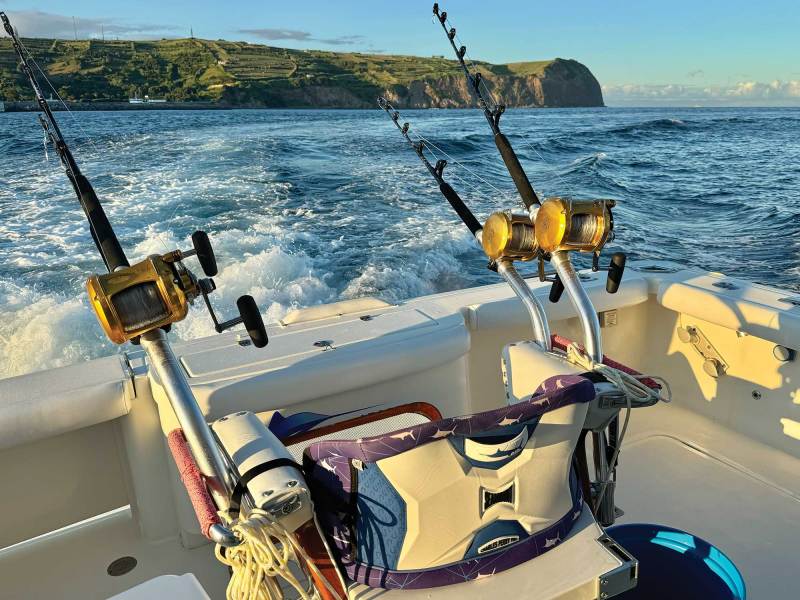 When traveling overseas, taking fishing tackle that you trust will maximize opportunities. A properly executed carnet will eliminate duty fees and taxes on that tackle.
George Poveromo
Carry-Ons
When traveling overseas, taking fishing tackle that you trust will maximize opportunities. A properly executed carnet will eliminate duty fees and taxes on that tackle.
George Poveromo
Carry-Ons
Traveling with just a few reels and rods won’t raise such eyebrows. Trip insurance should suffice here, providing all items, serial numbers and values are disclosed. This also includes listing such on declaration forms.
According to Herb Rosell of South Fishing Inc., a Florida-based travel and charter company specializing in high-end sportfishing trips, taking a few fly or spinning reels as carry-on is fine, providing that all luggage complies with overhead storage regulations.
It should be noted, however, that when traveling from the U.S. to a foreign destination, spooled reels are fine as carry on. However, when leaving a foreign country, reels with line are prohibited as carry on.
“It’s crazy, but the airlines think fishing line could be used to kill people,” says Rosell.
“Imagine taking some high- dollar fly or spin reels only to be told when leaving for home that they’re not allowed as carry-on unless the line is stripped off and, if saved, added to a check- in bag? This is a rule when flying out of a foreign country, so be aware.”
Rosell also recommends lockable cases for checked gear (to deter theft) and rod caddies not exceeding 62 linear inches (to avoid oversized fees). “Two- and three-piece rods are ideal for traveling,” Rosell says.
“My best advice when planning a trip abroad is to consult with your travel arranger and/or the captain you’ll be fishing with on any specific restrictions that country may have when it comes to bringing in tackle,” Rosell advises.
The post How to Travel Abroad With Fishing Gear appeared first on Salt Water Sportsman.