The Short Story of Ed Reynold’s Long Career
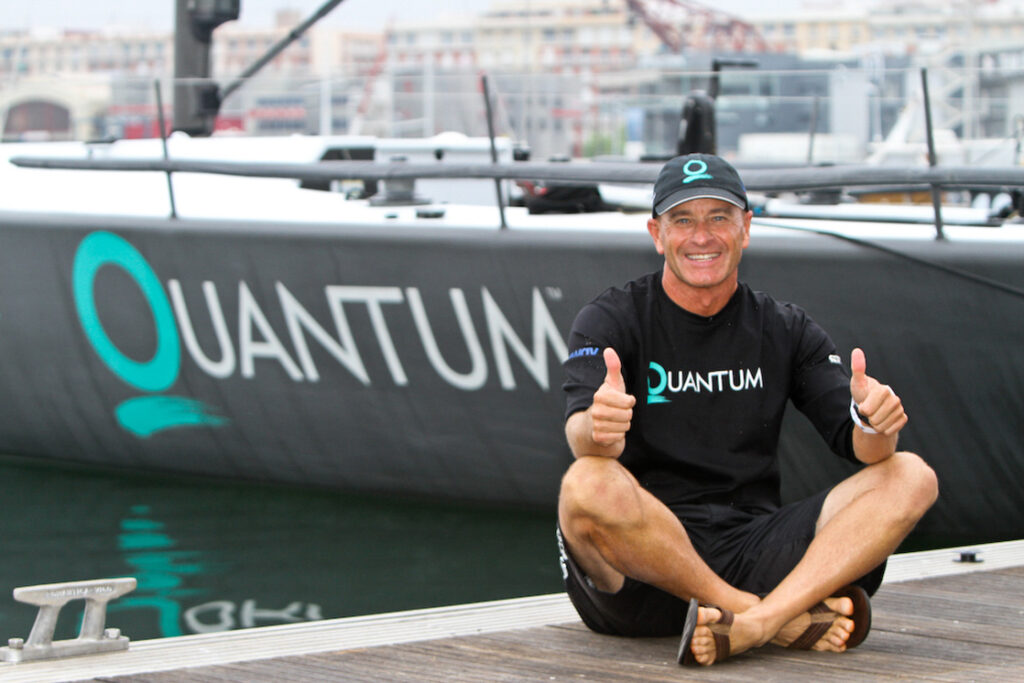 Ed Reynolds, Quantum Sails past president, has enjoyed a 50-year career in sailmaking, most of it in the grand-prix space.
Courtesy Keith Brash/Quantum Racing
Ed Reynolds, Quantum Sails past president, has enjoyed a 50-year career in sailmaking, most of it in the grand-prix space.
Courtesy Keith Brash/Quantum Racing
Ed Reynolds was way ahead of the whole “FAFO” thing that’s hip today. In fact, it was the find-out part that got him into the sailmaking business 50 years ago when he first walked through the door of a small Traverse City sailmaking operation simply looking for work. He had no idea how to make a sail, or how to use one for that matter, but the smell and the sounds of the loft that day were “just a magical thing.” Reynolds harassed the loft’s owner for weeks, even begging to work for a week without pay. Once he was in, he devoured every book about sailing he could get his hands on, and within three months he was running production and building sails. And soon enough, he was handling all the customers. Little did he know at the time that the art and science of sailmaking was his natural calling, a profession that has carried him to the pinnacles of grand-prix sailing.
Considered by peers to be one of the most sophisticated sailmakers of his generation, his chops as sailing team and program manager are equally impressive. Humble and hardworking, his mates would say, doesn’t even begin to describe his character. Success—and he’s enjoyed heaps of it, has never been about him or his winning sails. It’s always been about boatspeed. And perspective. And a life well lived in Traverse City.
Reynolds recently stepped down from the presidency from Quantum Sails, passing the role to his longtime colleague Andrew Scott, allowing him time to enjoy the fruits of his new labor of love—he now tends a small vineyard and is perfecting his Merlot and Rose blends one small batch at a time. Without all the global travel he’ll have more time and space to reflect on his remarkable lifetime in the sport. Before we let Reynolds traipse off into the vines for winter pruning, we extracted some wisdom to share with us. It’s but small tasting. For a deeper and more full-bodied conversation, hit the QR code.
Was there a moment as a young sailmaker that really launched your career?
Yes. I was unbelievably lucky, and for no deserving reason. It was a boat called Collaboration, a Nelson/Marek 46 built in the early days of IMS. It was unbelievable how fast this boat was. We won everything with it—Key West, Bermuda Race, both Mackinaw races, and everything we entered. The boat was so good that even we couldn’t screw it up. And then all of a sudden, I became this super genius, sailmaker. To be honest, we had an above average crew, but that boat just opened the doors to all sorts of opportunities. Eventually, I really didn’t care that much about the sailing part. I wanted to build teams, grow my business and live in Traverse City. I had credibility with owners because I had a successful business. I became a good enough sailor that the pros would say, ‘Well, Ed knows what we need to perform. He’ll never give us everything we want, but we always get what we need.’
Fifty years of being in and amongst the sports great programs, you could write a book of the things you’ve learned, but what stands out?
One of the most important things I’ve learned was from Bill Shore, and it’s a cliché among the teams, but he said, to paraphrase him, ‘You can only control about 65 percent of what takes place on a racecourse, but the one thing you can absolutely control is your boatspeed. You have to spend all your time on boatspeed. With starts and tactics, who knows what’ll happen. All of that you cannot control, but if boatspeed negatively impacts your results, then shame on you.’ And he’s 100 percent correct. So, the most important part of where I really tried to focus on as a sailmaker was boatspeed. One thing I find interesting about it is the difference in boatspeed between a fleet with 20 boats and a fleet with 60 boats. In big fleets your entire speed program has to be completely different because there will be times when you are downspeed, and, here you still need to be the fastest downspeed boat. It’s all relative.
In working with such high-end programs over the years, especially the Quantum TP52 program of late, what have you seen that really makes a difference with the sail trim between those that have the boatspeed and those that don’t?
The best sail trimmers are the best rig setup people. That’s one of the things that has really developed over the last 10 years and has made a major difference. Knowing exactly the up range and bottom range of a sale and knowing exactly what you have to do to the rig in order to maximize the different ranges that you’re trying to sail in is so important. A really good rig setup guy, as a sail trimmer, will end up manipulating his sail around to get the shape they need. Or at least closer to the right shape than a less experienced crew can.
The post The Short Story of Ed Reynold’s Long Career appeared first on Sailing World.