What Is a Safe Speed for Boats
Whether you have a 20-mph pontoon or a 100-mph twin outboard catamaran, whether you’re a novice boater or a seasoned salt, and whether this is your first boat or your thirtieth, how fast can you drive it safely? That’s a loaded question, as it must factor-in so many variables.
As a general statement, we’ll start with overdriving your capabilities and comfort level. That’s simple enough, and easy to recognize and then react. Too many don’t—it may be ego, lack of experience, or sheer bravado. But if you’re driving at the upper edge of your capability and you’re starting to feel skittish, it’s best to admit it to yourself; you’re driving too fast and it’s time to trim down and pull the throttle back. This is doubly important when you’re boating on crowded waters, rough conditions, and especially when you have riders aboard.
BOATER EDUCATION ✓Boater education provides critical knowledge on safe operation, emergency procedures, and regulatory requirements. Staying informed helps reduce risk for everyone on the water.
Low Experience Level
✓Boater education provides critical knowledge on safe operation, emergency procedures, and regulatory requirements. Staying informed helps reduce risk for everyone on the water.
Low Experience Level
If you’re a newbie to boating, or even to the type of boat you’re operating, take it slow and spend some seat time by yourself, in calm water and with little boat traffic around, before opening ‘er up. This is especially true when changing types of boats (e.g. from a small skiff you a larger center console, or an aluminum fishing rig to a high performance bass boat). It’s also true when stepping up in speed capability. If you’re coming out of a boat capable of 45 mph and stepping into one with 60, 70, 80 mph or even higher speed capability, it’s best to check your ego at the dock; as Cheech Marin said in the movie Tin Cup…”Be humble, homes”.
Build your confidence and experience simultaneously. Gradually increase speed and trim level as you become better acquainted with your new ride. Venture into choppier conditions and more crowded waterways as you gain experience.
LEARN YOUR LOCAL WATERWAYS✓Navigational safety depends on familiarity with local hazards, aids to navigation, and charted depths. Consult updated charts and Local Notice to Mariners before departure.
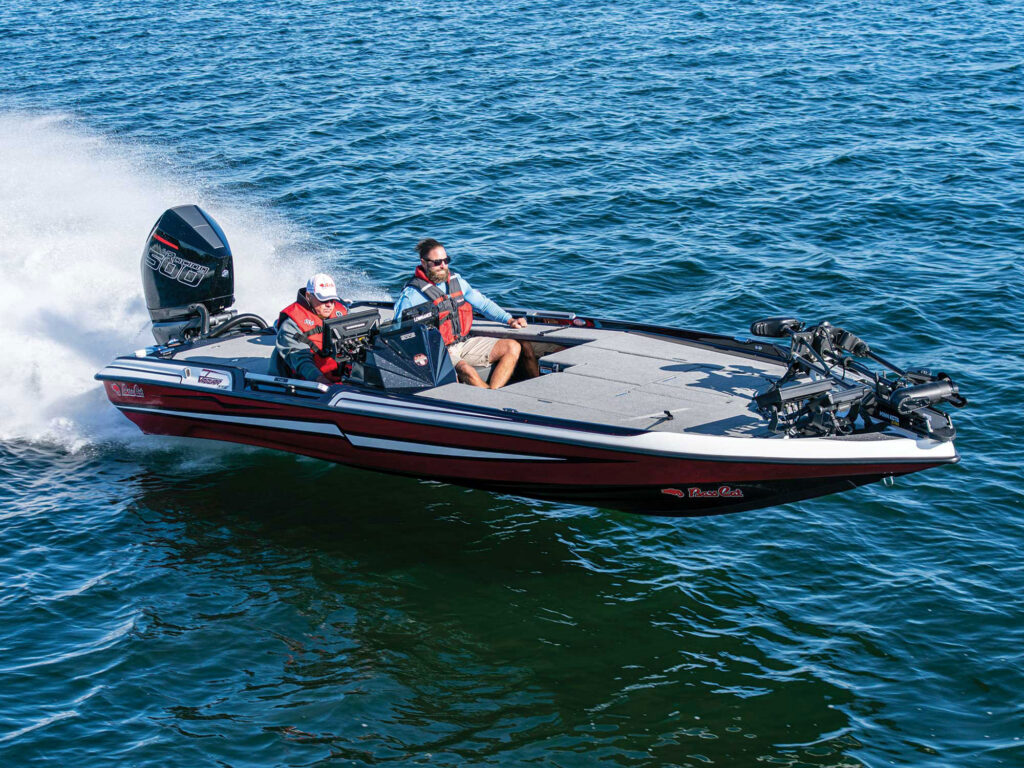 Adjusting the boat’s trim properly is one key to operating a boat safely. Even more important is situational awareness.
Bill Doster
Situational Awareness
Adjusting the boat’s trim properly is one key to operating a boat safely. Even more important is situational awareness.
Bill Doster
Situational Awareness
Pilots and soldiers are well trained in this discipline. It’s literally having eyes in the back of your head, and using all your senses at maximum capability. Anticipating several steps ahead, reading the water and weather conditions as well as the actions of other boaters around you, and being prepared to react in the safest, most decisive and careful ways possible—that’s situational awareness.
Rough WaterThe best overall statement about piloting in rough water is: drop speed and trim so that the boat rides level, with the bow slightly up, and stays on plane. This creates the smoothest and safest ride for everyone aboard, and provides the pilot with more time to adapt to changing conditions with throttle, steering and trim adjustments.
CHECK THE WEATHER✓The weather changes all the time. Always check the forecast and prepare for the worst case.
Crowded Waterways
Very similar to rough water piloting; best results come from reduced speed and trim, keeping the boat level, and employing situational awareness at its maximum to keep surprises to a minimum. Driving in a crowded waterway is like driving a car on a crowded freeway—only times ten. There are no lanes, no turn signals or brake lights (Or, brakes!), and in many cases, those surrounding you didn’t pass a boating safety course. Act as if anything can and will happen, because it can. For the safety of your guests aboard, keep speed down and maneuver carefully until the congestion clears.
The post What Is a Safe Speed for Boats appeared first on Boating Mag.